AUTHOR’S NOTE: This series on worship leader strategies gives systems and suggestions on how to better organize worship ministries as it pertains to planning, training, and practically leading congregations in musical worship. Like most strategy-oriented discussion in ministry, there are no fix-all solutions, but these strategies are suggestions that should help others organize their ministries to better serve their leaders, volunteers, and general congregations.
—
I grew up in a Southern Baptist church in Omaha, Nebraska. Throughout most of my childhood and teenage years we didn’t have any “modern” services other than our student gatherings. The songs that we sang were, in my opinion, old and wooden. Tired. Played out. When we finally moved into the 21st century and instituted a “contemporary” service, Hillsong UNITED was already a staple in youth groups across the world. Songs like “Mighty To Save” and “Take It All” had replaced “Shout To The Lord”, and even by then those songs were on their back end of popularity. I would be lying if I said that that wasn’t exciting to me personally! So much so that I had fallen into a very unhealthy and uneducated mindset about hymns and older worship songs: that they were useless and needed to be forgotten.
To build some consistency to my verbiage here, I want to make it clear that when I say “hymns” in this writing I’m talking about a few different things all grouped by one common term:
-Songs written in the form and structure of what constitutes a “hymn”
-Songs older than 5-10 years old that would be considered “old” to most teenagers
-Songs that most christians who have grown up in the Church or who have had exposure for long enough to know the “staples” and radio singles of the last 15-20 years already know
These songs would include global “hits” like “Mighty To Save”, “Shout to the Lord”, “How Great Is Our God”, and many others that were written at least 10-15 years ago as well as hymns written several hundreds of years ago. Really, the only group of songs excluded from this list are songs that were released sometime within the last 4-5 years. This is a broad- and I’m aware not a fully accurate- definition, but I think the point I’m making is better served including these songs.
Newer Isn’t Better
The trap I fell into as a student was that all songs that were old enough for my mom to know needed to go, while new songs of new expressions should be elevated and regularly utilized in our Sunday morning gatherings and services. I’ve even worked in churches who have rules about how old a song can be before it can’t be played anymore, so I’m well aware that this is not just an issue of my own invention. As worship leaders, there is such a draw to integrate what is new into our gatherings. There are influences within our congregation that tell us all the time “have you heard the new so-and-so album? That song on the album really ministered to me, you should do it on Sundays!” This isn’t the worst feedback in the world, and honestly when I was a worship pastor this was great insight for me to know what the people in my congregation were listening to and being ministered by. However, it’s easy to take this good thing to an unhealthy extreme.
New songs also come with rhythms and melodies that align with new cultural norms. Octave jumps, certain keyboard sounds and others that are likely unfamiliar to a good chunk of the congregation need to be taught. Though I come from a camp that believes that these sorts of opportunities to teach music are valuable, there is a point where you’re simply “adding to the noise” and teaching too much new musical standards for everyone. The Church does exist in the timeline of history and therefore is expected to progress in these sorts of ways, but that doesn’t mean we have to only engage these newer songs.
I would posit that newer songs aren’t better. They also aren’t worse. They’re just different. How valuable it is to have variety in our song selections! How wonderful it is to be able to cover so much ground musically and topically during that time that we worship together on Sunday mornings! It’s crucial for us to be connected to our current culture and speak its language, but it’s also vital for our health as The Church to be connected to our history.
We Need Hymns
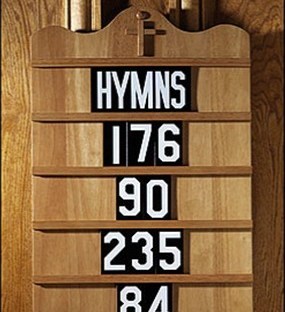
Hymns, older choruses, and others have been around for decades, some for hundreds of years. The songs that our ancestors sang are available to us. The rich history can be traced through songs. The events that were taking place in the Church can be related to what was happening in the Church, or even in specific congregations, and we cannot afford to forget them. We keep the Psalms around for those same reasons, why wouldn’t we want to engage these songs together just as well?
There’s much to be said about how hymns have taught the world to sing, even to be able to read music if your church is familiar with hymnals. I would even take it a step further and point out that these songs teach us rich theology and doctrine. The ones that have stood the test of time have done so for a reason! Don’t get me wrong, there are bad hymns out there. There are many that are just not musically excellent, and others that use strange metaphor and lyric. However, this is why we use the test of time. We don’t continue to sing “Great Is Thy Faithfulness” because it is easy to sing, but because it reminds us of the rich doctrine of God’s perfect and everlasting faithfulness. We don’t continue to sing “Come Thou Fount” because it’s easy to understand, but because it gives us a glimpse into the same trials that we have today that we are prone to wander and walk away from faith. There are many more that I could list, but we must understand that these songs bring a value that we just can’t get from songs that haven’t been through the ringer for decades already.
How To best use them
This is entirely subjective, but I have some opinions on the proper use of hymns on a Sunday morning. My context on Sundays is typically in a large, predominantly white, affluent congregation. However, I’ve needed to be aware of my surroundings when I travel to lead worship. One constant that I’ve found between both is that the use of hymns is almost always welcome, when they are utilized appropriately. I’ve made it a common practice when choosing songs to always include one hymn, or at least tag on a refrain of a hymn somewhere. These are several reasons that I do this, in no particular order:
-To connect the congregation to the whole of Church history through song
-To “round out” our theology that is sung together
-To engage first-time attendees or older generations who don’t know the new stuff
-To expose unchurched folks to these rich songs, both lyrically and musically
-To ensure that we don’t forget that God has been giving us new songs for a lot longer than it has been a “popular” thing to do
I find myself curious as to why we let some songs die and not others. Why is it that nobody sings “My Redeemer Lives” anymore, yet “Stronger” gets pulled back into Sunday mornings on occasion? This same question can persist even with hymns: why do we still sing “A Mighty Fortress Is Our God” and not “Royal Telephone”? Though I can give you my opinion, it really comes down to a few key elements: robust theology, biblical (yet culturally-understandable) verbiage, and a somewhat singable melody. Wouldn’t you know it, these are some of the same traits we have for our modern worship songs! What value it is to see that some things never change.
Might I recommend a practice for you? For every 5 songs that you keep in your bank of songs to pull from for Sunday mornings, would you keep one hymn in the rotation? Even if it’s been dressed up a little differently (I personally count “Cornerstone” as a hymn when I’m building a song bank) make a point to make room for these songs. They don’t need to take up a lot of space, and you don’t need to do them every Sunday. But make a point to stay in routine of integrating old songs with your new songs. I think your church will be blessed by it.
Did this help you as a worship leader? I’d love your feedback! Feel free to comment below with your thoughts or how you and your church organizes your songs! Have a question you’d like me to tackle for “Worship Leader Strategies”? Comment with those below as well, or shoot me an email!
———
Kevin McClure has been leading worship in the local church for over 10 years in different capacities of student and adult ministries. As a songwriter, musical artist, and worship leader he has had the honor of touring the United States both as a performer and worship leader over the better part of the last decade. With a heart to see believers learn how to take the act of worship beyond the setting of a group gathering, Kevin is incredibly intentional with his time on and offstage to help teach the practice of worship as a lifestyle. Kevin lives in Omaha, Nebraska with his bride Hailey and his two daughters, Everleigh (8) and Eliska (3). His favorite food is coffee (lifesource), loves bonfires, and is convinced that Jesus is a Chicago Cubs fan.

 Kevin McClure